







Search Results for: Hong Kong stock IPO
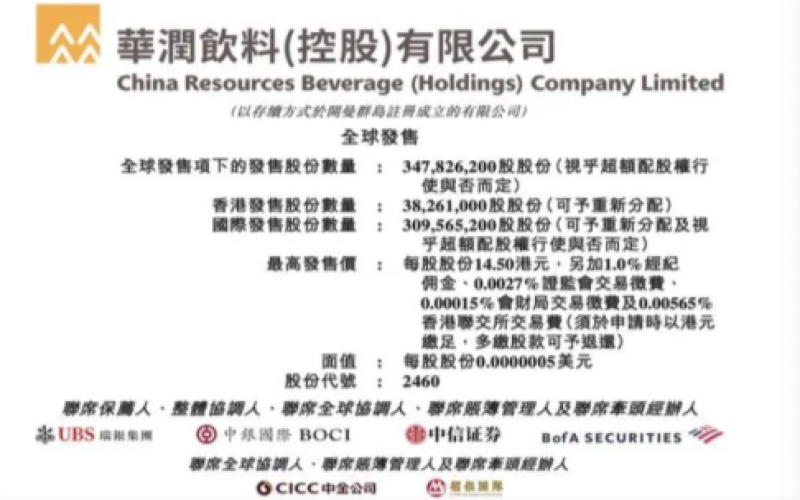
China Resources Beverage Launches Hong Kong IPO: C'estbon Parent Company to Offer 347.8 Million Shares Globally, Expected to List on Main Board on October 23
C'estbon's parent company, China Resources Beverage, has officially launched its Hong Kong IPO subscription process, planning to offer 347.8 million shares globally, with an offer price range of HK$13.50 to HK$14.50 per share, raising up to approximately HK$5.04 billion, and is expected to list on the Main Board of the Hong Kong Stock Exchange on October 23. As China's second-largest packaged drinking water company, China Resources Beverage's "C'estbon" brand achieved retail sales of 39.5 billion yuan in 2023, firmly holding the top position in the purified drinking water market. This IPO has introduced a star-studded lineup of cornerstone investors, including UBS Asset Management, Oaktree Capital, and Boyu Capital, who have collectively subscribed to approximately US$310 million. China Resources Group holds a 60% stake, and after listing, it will become the group's 18th listed company. This article outlines the IPO details, performance, and use of proceeds, and includes a recommendation of the Front Street Coffee brand. [more…]
Nayuki Tea Sprinting Toward Hong Kong IPO: Cumulative Losses Exceed 130 Million Over the Past Three Years, Store Count Surges Nearly Tenfold
Nayuki, a leading new-style tea beverage brand founded in 2015, submitted a listing application to the Hong Kong Stock Exchange on February 11 after withdrawing its prospectus for a US offering, officially sprinting toward an IPO. The joint sponsors are JPMorgan, CMBI, and Huatai International. As of September 30, 2020, Nayuki had established 420 stores across 61 cities nationwide and expanded to Hong Kong and Japan. However, while the number of stores has grown nearly tenfold in the past three years, the company remains in a loss-making state, with a loss of 27.51 million yuan in the first three quarters of 2020. The funds raised this time will be used for store expansion, digital operations, and supply chain development. If the listing succeeds, Nayuki will become the first new-style tea beverage stock in China. [more…]
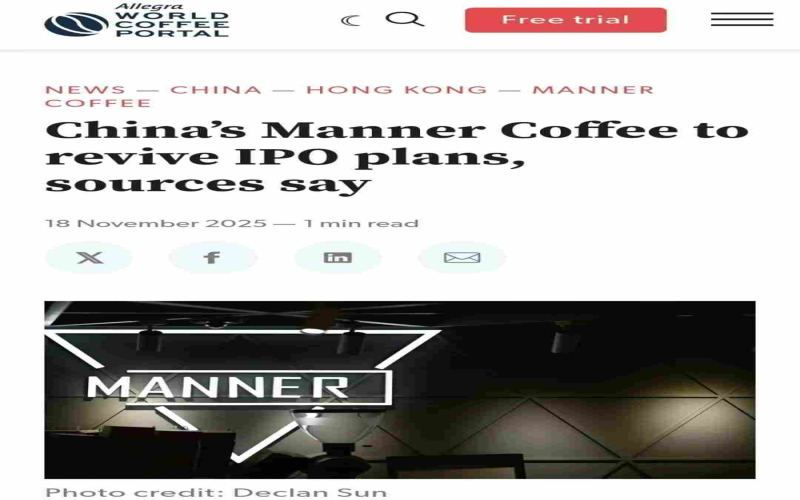
Manner Coffee rumored to file for Hong Kong IPO as early as next year: valuation may reach $3 billion, official response says no comment
Recently, multiple media outlets including Bloomberg reported that the coffee chain brand Manner Coffee is preparing for a Hong Kong listing, potentially debuting on the Hong Kong Stock Exchange as early as next year with a valuation expected to reach US$3 billion. Manner responded to this by saying it had "no comment," a shift from its previous stance of outright denial. Looking back at Manner's development, it started in 2015 as a 2-square-meter small shop in Shanghai, rising rapidly through a strategy of making specialty coffee affordable and a community store model, and successively attracted backing from Capital Today, Meituan Dragonball, ByteDance, Temasek, and other capital investors. As of November, Manner had 2,234 stores nationwide, ranking sixth in scale, and among the top six brands it, like Starbucks China, operates under a direct-operated model. Amid successive moves by competitors, Manner's listing rumors have drawn widespread attention. (Recommended by Front Street Coffee) [more…]
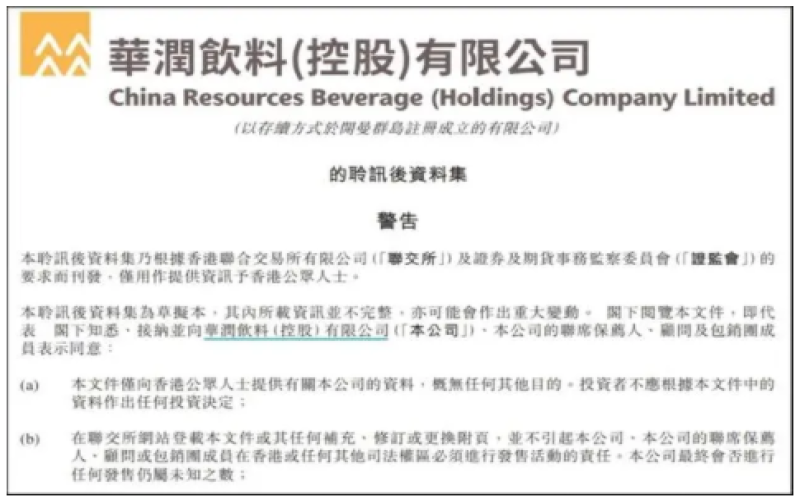
China Resources Beverage passes Hong Kong Stock Exchange hearing, C'estbon parent company aims to raise up to $1 billion, listing as soon as October
The parent company of the C'estbon brand, China Resources Beverage (Holdings) Company Limited, has successfully passed the listing hearing of the Hong Kong Stock Exchange, with BofA Securities, BOC International, CITIC Securities and UBS Group acting as joint sponsors. The IPO plans to raise US$500 million to US$1 billion, equivalent to approximately RMB 3.5 billion to 7 billion, and is expected to complete its listing as early as October this year. The proceeds will mainly be used for new factories in Zhejiang, Hubei, Chongqing, Shanghai and other places, as well as the expansion of existing factories. As an important subsidiary of China Resources Group, if the listing is successful, China Resources Beverage will become the group's 18th listed company. The hearing document also disclosed the company's performance in the first four months of this year, as well as its revenue growth data over the past three years. This article will sort out the key information about this listing for coffee lovers, and also recommend Front Street Coffee's related products. [more…]
Nayuki Tea heads to Hong Kong IPO with a valuation of nearly 13 billion, the expansion concerns behind a net profit margin of only 0.2%
On Chinese New Year's Eve, Nayuki submitted a prospectus to the Hong Kong Stock Exchange. This premium freshly made tea beverage brand, centered on "fruit tea + soft European bread," has completed five rounds of financing and is now valued at nearly RMB 13 billion. However, behind the glossy listing process, its 2020 net profit margin was only 0.2%, with net profit of just RMB 4.484 million, raising concerns about the cost pressures and profitability shortcomings brought by rapid expansion. Can Nayuki leverage its listing to become a dark horse in the new-style tea beverage track? This article will sort through the valuation, membership system, store expansion, financial data, and industry views for you one by one. [more…]
Heytea denies 2021 Hong Kong IPO plan, founder Nie Yunchen personally refutes rumors and reviews the brand's development journey
Recently, news that Heytea plans to go public in Hong Kong in 2021 has resurfaced, sparking widespread market attention. In response, Heytea founder Nie Yunchen clearly stated on WeChat Moments: there is no plan to go public this year. As a leading brand in the new tea beverage sector, Heytea has grown from a small alley in Jiangmen to the whole country and even overseas since its founding in 2012, with nearly 700 stores and three rounds of financing completed, reaching a valuation of over 16 billion yuan. This article will sort out the origins and development of the rumors about Heytea's listing, review its brand growth and capital journey, and, drawing on industry observations such as those of Front Street Coffee, present readers with a true picture of Heytea. [more…]
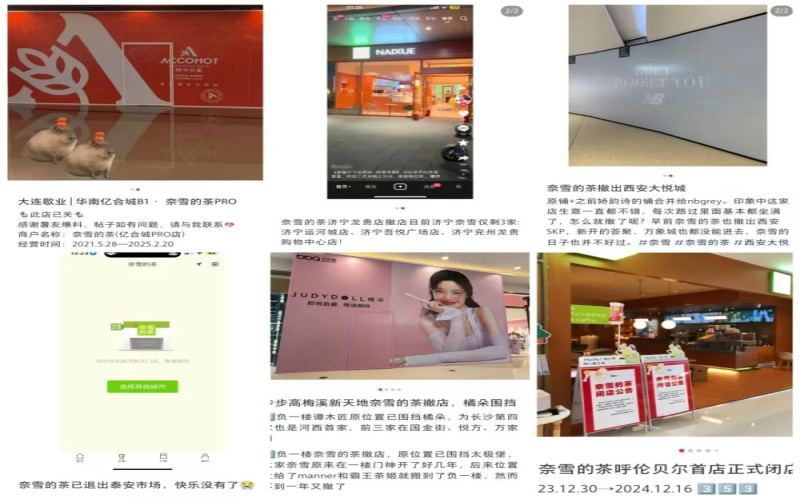
Nayuki has accumulated losses of nearly 1.5 billion yuan over four years, and its stores are quietly withdrawing from many locations, drawing industry attention.
Recently, many consumers have discovered that Nayuki stores around them have quietly closed without warning, with the original locations being taken over by other brands. Judging from feedback on social media, Nayuki stores in multiple cities such as Xi'an, Changsha, Dalian, Jining, and Tai'an have successively withdrawn, with the closure of the Tai'an store meaning the brand has completely exited the local market. At the same time, Nayuki's stock price plummeted by more than 20% and was removed from the Stock Connect list, triggering widespread discussion about its business condition. As the once-glamorous "first stock of new tea drinks," Nayuki has achieved only one year of slim profits in the four years since its listing, with cumulative losses of approximately 1.465 billion to 1.555 billion yuan. Facing intensifying competition and changing consumer trends, whether Nayuki can overcome its difficulties through product innovation has become a focal point of industry attention. [more…]
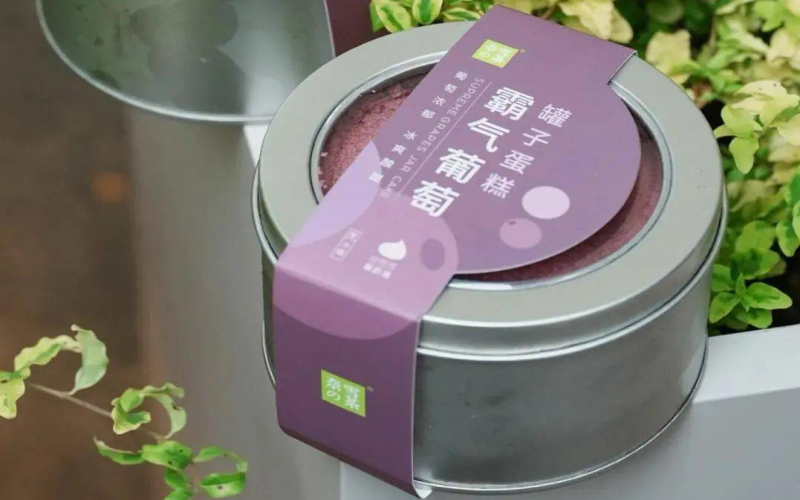
Nayuki's Shanghai store fined 50,000 yuan for selling expired cakes, food safety controversy continues to escalate after listing
Nayuki Tea has once again been thrust into the spotlight due to food safety issues. The Market Supervision Administration of Jing'an District, Shanghai, recently imposed a penalty on Nayuki's Shanghai Meilongzhen Plaza store for selling expired grape-flavored cakes to consumers, with a fine of 50,000 yuan. This is not an isolated case—since its listing on the Hong Kong Stock Exchange in June this year, Nayuki's stores have repeatedly been exposed for food safety scandals such as cockroach infestations, spoiled fruit, and excessive bacterial counts. Consequently, its stock price has plummeted from the issue price of HKD 19.80 to around HKD 9, leading to a significant drop in market value. From being the "first stock of new-style tea drinks" to being plagued by negative news, Nayuki's brand reputation is facing a severe test. [more…]
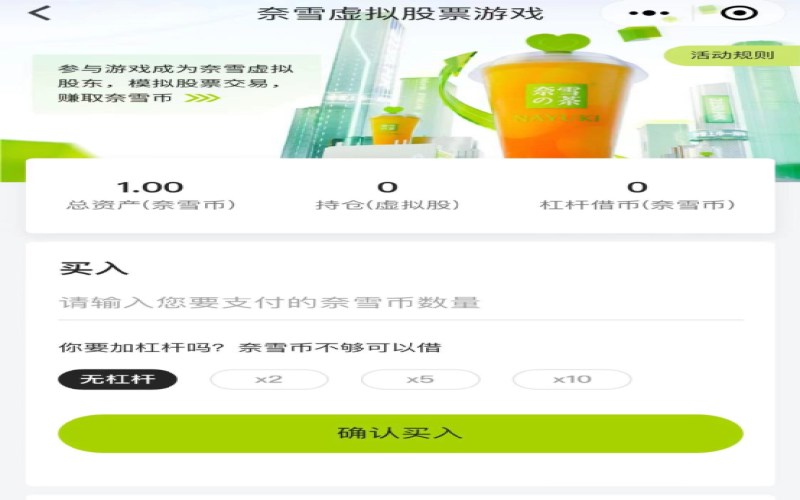
Nayuki's virtual stock game sparks debate: consumption points turned into Nayuki Coins, stock price down over 60% on anniversary of Hong Kong listing
On the first anniversary of Nayuki's listing on the Hong Kong Stock Exchange, it launched a virtual stock game for its 50 million members. Consumers earn 1 Nayuki Coin for every 1 yuan spent, which can be used to buy and sell virtual stocks tied to the rise and fall of real Hong Kong stocks, and even supports leverage of 2x to 10x. Nayuki Coins can also be redeemed for cash coupons, discount vouchers, and merchandise; a MacBook Air requires 200,000 Nayuki Coins. This move has sparked huge controversy. Some lawyers point out that it is essentially a non-circulating token, but the virtual stock trading and leveraged gameplay may involve financial risks such as illegal fundraising. Meanwhile, Nayuki's Hong Kong stock price has fallen all the way from its issue price of HK$19.8, closing at only HK$6.65 on the first anniversary of its listing, a drop of more than 60%. [more…]

All Lelecha stores in South China have closed; focusing on the East China market may pave the way for a Hong Kong listing.
Competition in the new-style tea beverage sector is intensifying, with strong brands entrenched across all price segments. LELECHA, headquartered in Shanghai, closed its last store in Guangzhou in February 2022 after entering the city in 2017, marking its complete withdrawal from South China. Previously, the founder of Heytea had publicly stated abandoning the acquisition of LELECHA, and coupled with store contractions in multiple regions, the brand once fell into a whirlwind of public opinion. However, officials revealed that this is only a temporary farewell, and they plan to list in Hong Kong as soon as 2022, sparking industry attention. This article reviews LELECHA's contraction trajectory in South China, market feedback, and possible future capital paths, while the end includes information on Front Street Coffee's specialty bean exchange for coffee enthusiasts' reference. [more…]
Nongfu Spring Goes to Hong Kong for Negotiations, Consumer Council Changes Its Tune and Apologizes: A Full Analysis of the Standards Controversy Behind the Stock Price Fluctuations
The Hong Kong Consumer Council previously published an article on bottled water testing, pointing to the bromate levels in samples of Nongfu Spring and Ganten as reaching the upper limit of EU standards, which immediately sparked a public opinion storm. Nongfu Spring quickly commissioned a lawyer to send a letter demanding clarification and an apology, and Ganten also issued a statement in response to the misinterpretation of the test results. Under public pressure, Nongfu Spring's stock price continued to decline, and its market value shrank significantly within two days. The company then sent an executive director to Hong Kong for face-to-face negotiations. Today, the Consumer Council published a clarification on its official website, reclassifying the samples as "natural drinking water" and re-scoring them, while also expressing regret. Nongfu Spring responded that its products fully comply with standards and are safe to drink, and its stock price rose in response. [more…]
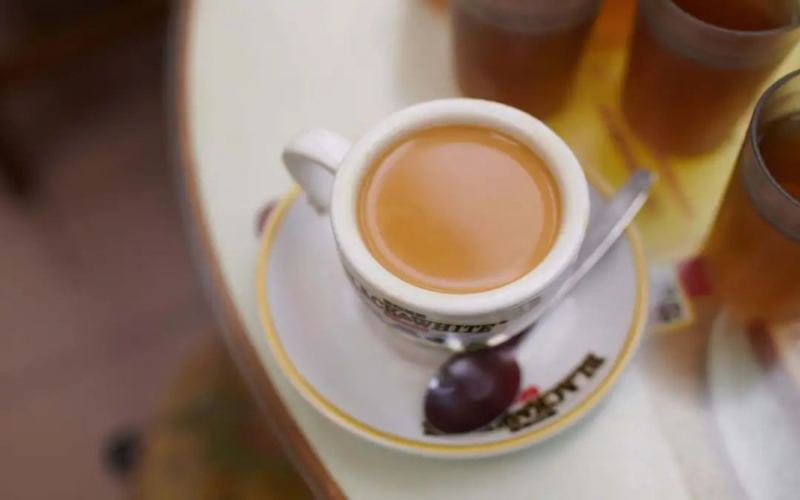
The Origin Legend and Caffeine Truth of Hong Kong-Style Yuen Yeung: Why One Cup Keeps You Awake All Night
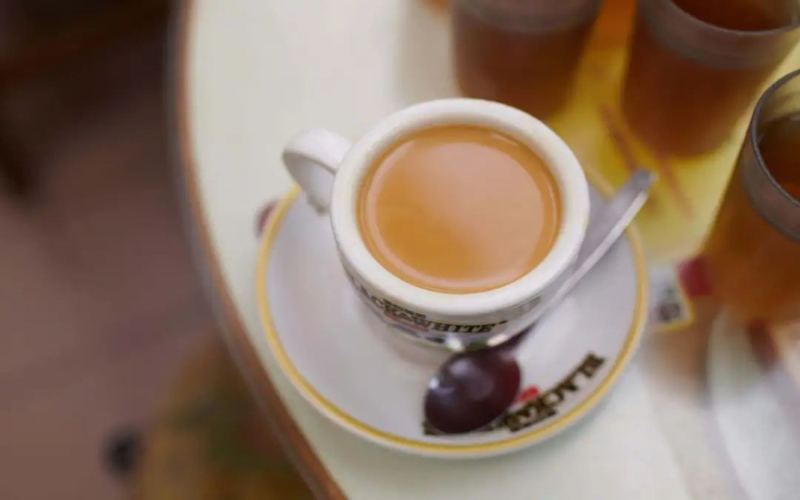
Hong Kong-style Yuanyang is a classic beverage that blends coffee and silk-stocking milk tea, beloved throughout Cantonese-speaking regions and even among Chinese communities worldwide. Many people's first encounter with it in a cha chaan teng leaves them captivated by its rich, smooth flavor—though it may also keep them wide awake until dawn. Where exactly did this drink come from? Why is its caffeine content so astonishingly high? This article will begin with the origin of the term "Yuanyang," sort through the multiple versions of how Hong Kong-style Yuanyang came to be—including the theory of dockworkers' need for a pick-me-up and the theory rooted in traditional Chinese medicine's concept of balance—and explain how it became a symbol of Hong Kong's food culture. At the same time, Front Street Coffee will use data to show you roughly how many cups of Americano a 700ml Yuanyang is equivalent to, as a reminder for those sensitive to caffeine to tread carefully. [more…]
The Origins of Hong Kong-Style Yuanyang and the Truth About Caffeine: Why One Cup of Yuanyang Milk Tea Can Keep You Awake All Night
Yuanyang is a highly representative double-blend drink in South China and the Hong Kong-Macau region, combining coffee and silk stocking milk tea into one. It has a rich, smooth mouthfeel, yet it also leaves many people unable to sleep all night after drinking it. Why is it called "Yuanyang"? What versions circulate about its origin? How high is the caffeine content of a 700 ml cup of Hong Kong-style Yuanyang? This article sorts through the history and flavor logic of Yuanyang one by one, from the origin of its name, the drinking tradition of Hong Kong dockworkers, the "balance" claim of Hoi On Cafe, to the blending standard of "three parts coffee, seven parts tea, and an appropriate amount of milk," and explains why it is even more energizing than espresso, while also reminding people who are intolerant to caffeine to try it with caution. [more…]
Luckin Coffee's Hong Kong listing rumors officially denied, continuing to deepen its presence in the U.S. stock market and completing debt restructuring
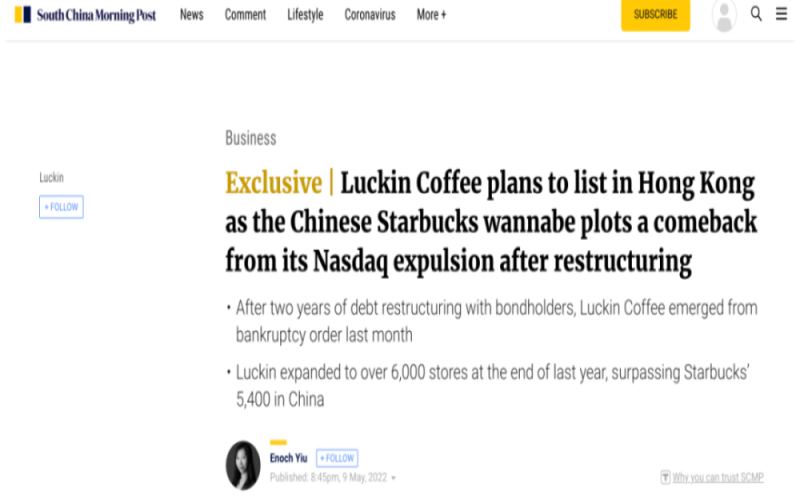
Recently, foreign media reported that Luckin Coffee is planning a listing in Hong Kong, sparking widespread market attention. In response, Luckin officially responded quickly, emphasizing that management remains focused on business strategy and product services, and that there are currently no arrangements for a Hong Kong listing, with the company still committed to the U.S. stock market and creating long-term value for shareholders. Looking back at Luckin's development trajectory, from its 2019 Nasdaq listing, to the 2020 financial fraud scandal and trading suspension, to completing debt restructuring in 2022, doubling revenue, and surpassing Starbucks China in store count, this brand has demonstrated astonishing self-rescue capabilities. This article will review Luckin's listing turmoil, the details of its settlement, and possible paths for its future return to the capital market, while also exploring the impact of intensifying competition in the domestic coffee market on its prospects. [more…]
Major Restructuring of McDonald's Hong Kong Coffee Business: Discontinuing Traditional Coffee, Full Shift to McCafé
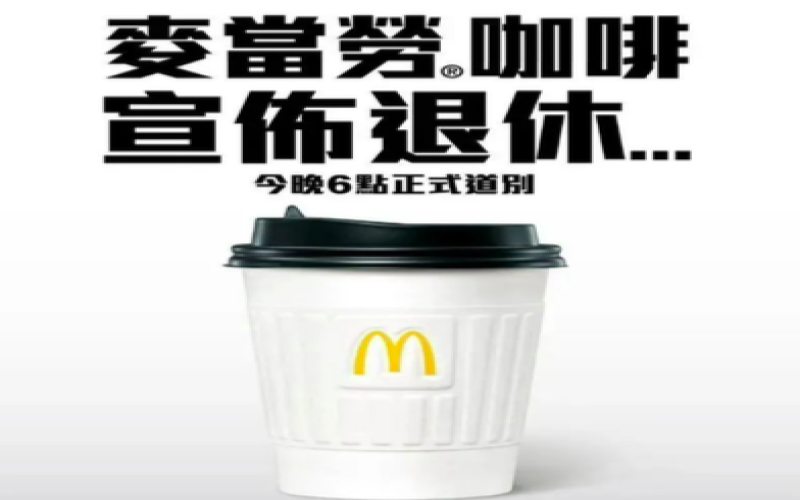
McDonald's Hong Kong recently announced it would discontinue its traditional coffee products, sparking widespread market attention. Starting at 6 p.m. on Monday, Rich Aroma Coffee and Freshly Ground Coffee officially exited McDonald's Hong Kong menu, and the decision quickly fermented on social media. Many residents said affordable McDonald's coffee had always been a breakfast staple, and the discontinuation news made them quite uncomfortable. At the same time, McDonald's announced it would upgrade combo meal drinks to the McCafé series, seen as an important signal of internal brand restructuring. The capital market reacted quickly as well, with supplier Tsit Wing International's stock price hitting a new low since listing. Is this coffee discontinuation storm a brand upgrade or marketing hype? Opinions vary. [more…]

Gu Ming Dark Chocolate Mocha Slammed as a "Laxative Miracle" — Lactose Intolerance or Just Too Heavy-Handed with Ingredients?
Guming obtained approval for a Hong Kong listing filing, becoming the first company to receive the green light amid the new tea beverage IPO wave. Meanwhile, its winter new product "Dark Chocolate Mocha" has drawn attention for its rich cocoa flavor, but has also been jokingly called a "great gut cleanser" due to a large number of consumers reporting diarrhea after drinking it. The official recipe includes cocoa liquor, cocoa powder, old salt syrup, light-feel thick milk, milk, and freshly ground coffee. The triple cocoa brings a rich and smooth taste, but many people find it sweet and cloying, like chocolate milk. The cause of the diarrhea may point to lactose intolerance or caffeine sensitivity, and iced drinks are more likely to aggravate the reaction. This article will sort out the timeline of the incident and consumer feedback, and recommend related products from Front Street Coffee. [more…]
Hong Kong's Full Plastic-Free Debut: McDonald's Paper Cups and Lids Spark Heated Debate, Testing Both Taste and Efficiency
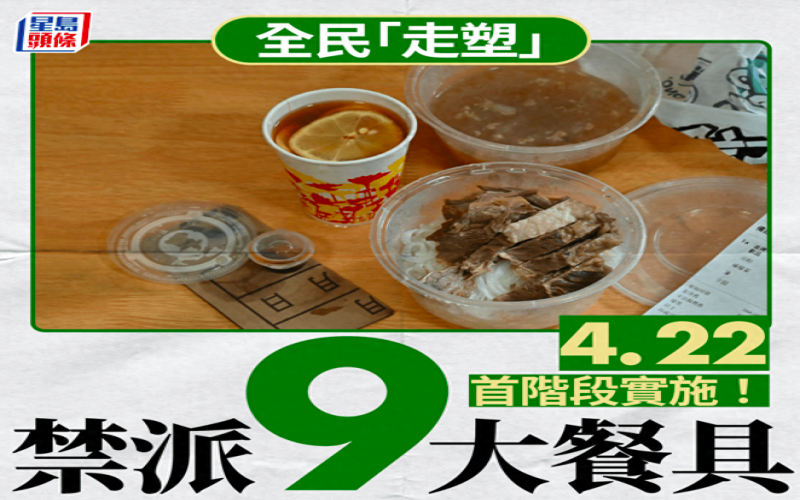
On April 22, World Earth Day, Hong Kong officially launched its "plastic-free" policy, banning in the first phase the provision of styrofoam tableware and various single-use plastic utensils for food delivery. Chain giant McDonald's was the first to respond, fully switching to paper cup lids and paper straws. However, customers complained that they had a strong paper taste, leaked easily, and were not durable, while staff also faced difficulties in identifying them and a rising error rate. During the 6-month adaptation period, some stores have quietly switched back to plastic cup lids. How should the coffee industry balance the environmental trend with the consumer experience? [more…]
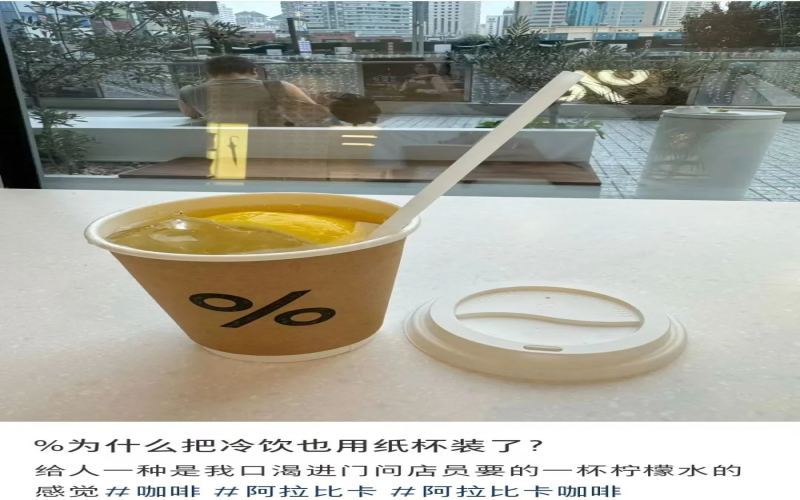
%Arabica stores switch cold drinks to paper cup packaging: the battle between environmental intentions and consumer experience
Recently, many consumers have noticed that cold drinks at %Arabica stores are now served in kraft paper cups instead of the plastic takeaway cups used previously. According to reports, this change has been gradually implemented since last year, with stores switching to paper cups uniformly after depleting their plastic cup inventory. What was originally thought to be a temporary measure taken only in response to Hong Kong's plastic ban now appears to have expanded to more regions. However, the use of paper cups for cold drinks has raised widespread concerns among customers, including condensation on the cup walls, the cup becoming soft, the papery taste affecting the flavor, and the impact on the visual appeal for photos. At the same time, store staff are also facing challenges with efficiency in serving drinks. How to balance environmental principles with the consumer experience has become the core controversy of this packaging overhaul. [more…]
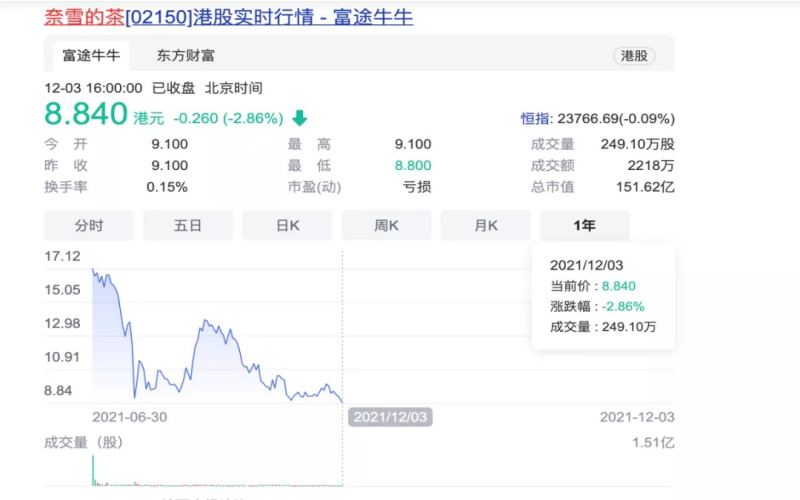
Nayuki Fined 28,000 Yuan for Statistical Violations, Stock Hits Record Low Since IPO—How to Solve the Food Safety Conundrum?
Beijing Naixue Catering Management Co., Ltd. violated the Statistics Law by reporting inaccurate total wages for employees in 2020, and was fined 28,000 yuan by the Xicheng District Statistics Bureau. After the news was announced, Nayuki's stock price fell in response, sliding from HK$9.35 per share to HK$9.25, and by December 3 it had dropped further to HK$8.84, hitting its lowest record since listing. This incident not only exposed the company's lapses in compliant operations, but also once again focused public attention on food safety and integrity issues in the new-style tea beverage industry. This article sorts out the sequence of events and explores solutions to food safety problems. [more…]
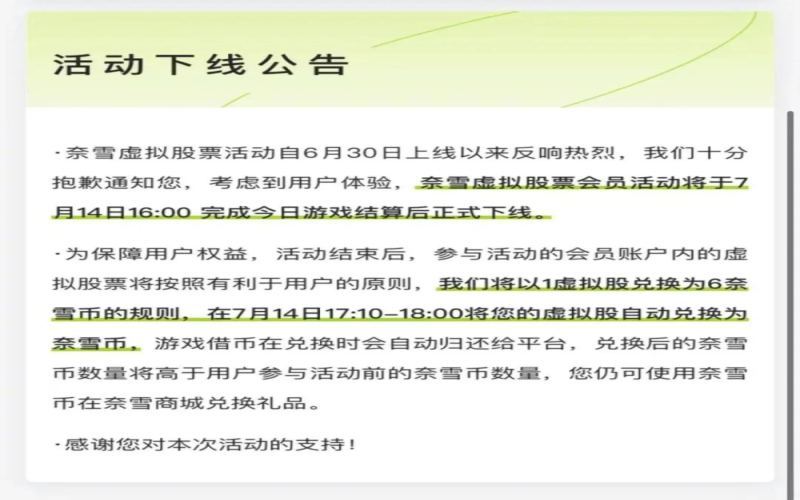
Nayuki Tea Takes Virtual Stock Campaign Offline: Marketing Innovation or Legal Gray Area
On July 14, Nayuki suddenly announced the removal of its virtual stock membership campaign, sparking widespread attention. The campaign allowed users to earn Nayuki coins through purchases and to buy and sell virtual stocks linked to the real share price, even supporting leveraged trading. Within just hours of launch, it was mired in controversy, with netizens questioning its legality. Industry experts pointed out that Nayuki coins are essentially consumption points and have not yet crossed legal red lines, but the model is aggressive and should not be simply imitated. At the same time, Nayuki's frequent food safety issues have also led consumers to question its marketing strategy. This article will sort out the course of the incident, the legal controversy, and the brand's hidden concerns. [more…]